
One of the biggest mistakes I see families make is buying too small of a dehumidifier for their space and moisture load.
In humid climates, older homes, homes with previous water damage, or mold-sensitive households, we need much larger units than the manufacturer recommends.
Here’s exactly what I use — and I’ll explain the reasoning afterward!
As an Amazon Associate I earn from qualifying purchases.
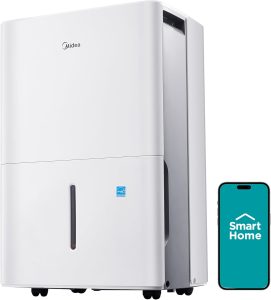
Midea 50-pint 4500 sq. ft. Dehumidifier
This is the dehumidifier that I use in our basement.
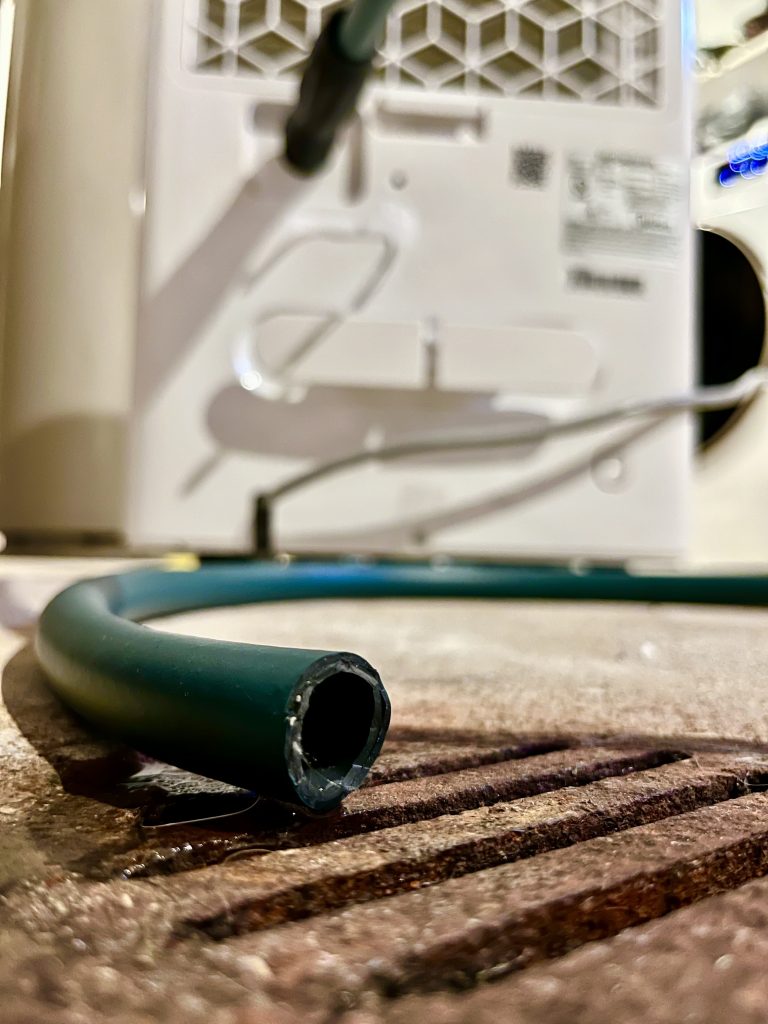
- Gravity drain connects to standard garden hose for easy drainage; run hose to floor drain
- Connects to WiFi and is fully controllable by Midea smartphone app
- Select target RH% or continuous run
- 50 pint bucket. Rated for 4500 square feet.
Pro tips & Important Details
- Pair this unit with X-Sense Humidity & Temperature sensors to verify unit effectiveness on the fly.
- Midea app is free and interfaces with many Midea brand products. Control all devices from a single interface.
This dehumidifier is perfect for a basement with a floor drain.
My basement is a moisture reservoir, so needs to have a dehumidifier running in it 24/7. The gravity drain doesn’t rely on a pump (which can fail.)
Midea 50-pint 4500 sq. ft. Dehumidifier with Pump
This is the dehumidifier that I use upstairs.
- 50-pint bucket holds significantly more water than smaller units
- Connects to WiFi and is fully controllable by Midea smartphone app
- Select target RH% or continuous run
- Optionally use water pump with included hose to drain water into tub or sink
Pro tips & Important Details
- Pair this unit with X-Sense Humidity & Temperature sensors to verify unit effectiveness on the fly.
- Midea app is free and interfaces with many Midea brand products. Control all devices from a single interface.
The magic of this unit is the pump, which bypasses the bucket to enable it to be run continuously.
Dehumidifier pumps can fail over time, so I only use the pump feature when we’re out of town and cannot empty the bucket.
Why Sizing Matters
The 50-pint Midea is a big machine. It’s very heavy and is large enough to use as a rolling side table in the winter!
Our current house is about 1800 square feet and we have two of these things running — one on each level.
Our last rental was only 750 sq ft and we still needed two 3000 sq ft dehumidifiers to keep up with the moisture load during the summer!
Real-world conditions can add a lot of moisture to the building envelope:
- Damp basement due to moisture in the soil working its way through the foundation, and/or humidity coming in through the sill
- Humid climate
- Rainy climate
- Openings in building envelope and/or lack of exterior barrier allowing humidity to enter
- New slab or concrete work that hasn’t fully cured
- New construction or renovation materials that haven’t fully dried (mastic, drywall mud, paint)
- Bathrooms and kitchens with inadequate exterior ventilation
A dehumidifier running in the basement won’t have a significant impact on the upstairs humidity unless air is being intentionally circulated between the floors. Even then, the effect is blunted.
Humid climates and tight enclosed spaces like RVs typically need dramatically oversized dehumidification.
So, yes, I run beasts rated for 4500 sq ft in my home because I need to know they’re going to be able to keep up with super-humid weather. I don’t want to be in a position of watching the humidity creep toward the danger zone and being unable to stop it.